Tuesday, November 9, 2021

If Charlotte, why not Raleigh for relocating the Atlantic Coast Conference headquarters?


Not to rekindle the on-going love-hate relationship between Charlotte and Raleigh, but when it comes to the Atlantic Coast Conference possibly relocating its headquarters, possibly departing Greensboro after nearly 70 years, I ask, “If Charlotte, why not Raleigh?”

Recently, the ACC Board of Directors voted to explore, to look at, moving out of Greensboro which doesn’t mean Greensboro is losing the ACC headquarters. It means the ACC will be talking to other cities throughout the ACC footprint that meet basic criteria.

When stories about ACC headquarters relocation appear, Charlotte gets mentioned as a possible replacement headquarters, but Raleigh is not.

 “I saw the news and had the same reaction,” Scott Dupree, executive director of the Greater Raleigh Sports Alliance, told me in an email when I asked him for a comment on “If Charlotte, why not Raleigh?” The GRSA is not in the relocation business. It’s in the recruitment of sports tournaments, events, championships, and the likes thereof. But he has a strong opinion why the ACC should pick the Raleigh are

“Based on the stated criteria from the conference office,” wrote Dupree, “Raleigh and Cary certainly check the boxes and would without question be strong and viable candidates. Then you factor in this market’s unmatched passion for ACC sports and our history with the conference, and it makes a lot of sense. You can make a compelling case for the Raleigh region.”         

 The criteria are simple with both Charlotte and the Raleigh region meeting most conditions:

  • Eastern Time Zone (check for Charlotte, check for Raleigh);
  • Population size with positive growth trends (check, check);
  • Diversity of population (check, check);
  • Large hub airport with effective accessibility to and from all ACC members (check, check, except usually air fares to Charlotte are more expensive than those going through Charlotte to, say, Raleigh);
  • Benefit to the ACC brand and synergies to existing and prospective partners (check, check); and
  • Financial considerations related to operational expenses (check, check).
There may be other criteria which both cities, the two top population centers of North Carolina, meet. To get a better handle on thislook deeper.

Maybe the only thing Charlotte has in relation to hosting the ACC headquarters is Bank of America Stadium, host of the NFL’s Panthers and soon to host a professional soccer team. It’s the current host of the ACC football championship game and the Mayo Bowl. It can still be that host without the ACC headquarters in Charlotte.

ESPN, which owns the ACC Network, has a studio in Charlotte, but it’s not for the ACC. It’s for the Southeastern Conference, right in the middle of the ACC’s geographical footprint. (Actually, there are two ESPN studios in Charlotte. The second is in the basement of Mark Packer’s home where he and Wes Durham host the ACC Network’s Packer and Durham morning news and information show Monday through Friday. All other ACCN studio shows are produced on ESPN’s Bristol CT campus; what a shame.)

In addition to the listed criteria, what does Raleigh offer? Re-read the statement from Scott Dupree. There is an “unmatched passion for ACC sports” here with N.C. State in Raleigh, Duke in Durham, and North Carolina in Chapel Hill. While having conference members in such proximity is not necessary (reference Greensboro with no ACC school), relocation of a conference headquarters should consider such closeness, giving the Raleigh area a leg up on Charlotte. The enthusiasm here for the Atlantic Coast Conference should carry over to the revenue side of relocating to Raleigh.

If the ACC sets up shop in Raleigh, a full-fledged television studio could be part of the financial considerations to entice ESPN to locate the ACCN studio alongside the ACC’s new digs.

That kind of enticement or package deal is up to groups such as the Raleigh and Cary Chambers of Commerce and Wake County Economic Development. These are the folks who are experts in such high-profile relocation efforts. These agencies should not sit back and yield to Charlotte. Go after the ACC, now!

The recruiting and relocation of the Atlantic Coast Conference headquarters is not as sexy to the public as, say, Apple, and it would not generate hundreds or thousands of jobs, but it would be a giant feather in Raleigh’s (or Cary’s) cap to have the ACC headquarters in the state capital of college sports.

​​Causing Charlotte officials seeking the same to ask, “Why Raleigh?”

Monday, April 20, 2020

All The News That's Fit or All The News That Fits


Los Angeles Times editorial in The News & Observer, 4-19-2020
-----------------------------
All The News That's Fit To Print—New York Times slogan
All The News That Fits, We Print—Sarcastic NY Times slogan
-----------------------------
       It was Sunday morning, April 19, 2020. As is our everyday custom, my wife and I were sitting at the kitchen island, reading the print edition of The News & Observer, the McClatchy Co.,-owned Raleigh NC newspaper.
        Just as those who prefer holding a book in their hands to read, we prefer the printed newspaper over the on-line version and even the so-called e-edition, a replica of the actual newspaper found on the newspaper’s website.
        These days, with so much of the news about and stories written on the coronavirus and it’s COVID-19 illness, we look forward  to the comics but much more to the opinion pages—the editorial and op-ed pages as they are called—than we do the news section with coronavirus stories ad infinitum, not to mention ad nauseam, and the sports pages where results of the previous night contests are missing (joke here; laugh).
        The N&O opinion department is pretty good with offering a variety of local opinions and national columnists. Also included are editorial positions from other newspapers such as the Los Angeles Times.
        It was one from the LA Times that caught my attention and gave me the urge to write this post.
        With the headline, Higher education to feel virus’ effects for a long time, the  LAT editorial touched on the current state of education with college on-line substitutes for in-person classes, the disadvantages the disadvantaged have because of lack of resources for on-line education, the affordability of today’s college, and the economic resources colleges are missing today, all because of the coronavirus.
        “The higher education system can certainly try to return to normal after the virus-related restrictions are lifted and the economy bounces back, but why bother?” the LA Times Editorial Board wrote. “Normal wasn’t so hot.”
        One paragraph later, the editorial as printed in The N&O ended, but something was missing. I was expecting well thought out and reasoned recommendations of what to do to make higher education better, even if just in the minds of the LA Times Editorial Board. It didn’t take me long to land on the LA Times’ website editorial page where I found at the end of their printed version these three robust paragraphs:
-----------------------------
​        There are too many misplaced priorities. U.S. colleges spend particularly large amounts on non-teaching staff such as fundraising experts, marketers and administrators; they also pursue costly star faculty and smaller class sizes, which haven’t been shown to result in a superior education but do result in higher college rankings by such publications as U.S. News & World Report. Our colleges generally expect too much paper-publishing by faculty and not enough teaching. And their financial aid practices are generally obscure and differ from school to school, so families have little idea how to shop for the most affordable options.
The N&O Op-Ed Page, 4-19-2020,
With plenty of space top & bottom
        That’s not how European nations do it. Their largely stripped-down model focuses on academics. Classes tend to be larger and administrative costs far smaller. Costs are transparent and more centralized. More students live at home and commute. Athletic teams are few, if they even exist; contrary to what most people think, such teams generally cost colleges far more money than they bring in and tend to benefit affluent students, not disadvantaged ones, in college admissions.
        The full-on European model might never work here. The emphasis U.S. colleges place on faculty research has helped make our research universities the envy of the world. Commuting isn’t an option when schools might be far away. It would take big tax increases to underwrite free tuition for all. But we can use the current crisis to address an ailing system by adopting practices that lower costs and emphasize the “education” in higher education.
-----------------------------
        The N&O did not include the complete editorial from the LA Times. McClatchy Co., the bankrupt media organization, had purposely removed the final three paragraphs so the editorial would fit into the designated space on The N&O op-ed page. 
        What used to be a make-up/layout person with an “exacto” knife and is now that same person, not a qualified editor, in front of a computer screen showing the layout pages and with a finger on a delete button. This is the person deciding that I had read enough in the print edition and in the newspaper’s e-edition, even if the conclusion and recommendations were removed.
        This is not unusual. But today was different.
        News articles and opinion pieces not generated by staff writers get edited for space all the time. What we read Sunday was the result of filling the available space; the three final paragraphs were eliminated because there was no more space. Cut, slash, burn!
        The President and Executive Editor of The N&O and the North Carolina Opinion Editor do not claim credit for this. They kick the can back to a make-up/layout department that creates the newspaper for Raleigh, The Charlotte Observer, and other McClatchy newspapers. Editing to make sense of the story/editorial requires too much time and a grasp of the subject matter. It's also a financial burden, reader be damned.
        Interestingly, on that Sunday op-ed page there was about nine column inches of white space—six inches at the top of the page and three at the bottom—plenty of space for the lost words and interesting suggestions made by the LA Times Editorial Board.
        The very next day, the same thing happened to a George Will column from the Washington Post. His article was titled, State shows how not to hold election during a pandemic. If you read the column and wonder what is missing, here goes:
-----------------------------
        Wyden and Sen. Amy Klobuchar, D-Minn., propose legislation to mandate and subsidize state measures to facilitate VBM. Although subsidies in today's emergency might be defensible, mandates unwisely — and unnecessarily — meddle with the laboratories.
        New Hampshire's Republican Gov. Chris Sununu has endorsed VBM. Elections in Oregon, Washington, Hawaii, Colorado and Utah are essentially entirely VBM, with ballots mailed to eligible voters. Twenty-eight other states, including California, Florida and Arizona, plus the District of Columbia, allow absentee voting without providing a reason. So, a majority of Americans have VBM, absent the convenience of automatically receiving ballots — although some states' voters can put themselves on a list to receive ballots. This alarms those who fear the sort of substantial fraud that has not been verified after hundreds of millions of votes cast by mail.
        Time was, Election Day provided a communitarian moment, with almost all voters visiting polling places. In 2016 however, 41.3% of votes were cast early or absentee; in 2018, 43.1%; in 2020, perhaps a majority. This year early voting will begin at least as early (because of COVID-19, states' rules are in flux) as Sept. 18 in Minnesota. Scores of millions of votes might be cast before the presidential debates are over. However, given the usual caliber of such debates, this will not appreciably deprive early voters of pertinent information.
        When Trump says VBM would mean "you'd never have a Republican elected in this country again," he concedes that VBM increases turnout and that Wisconsin Republicans are right about the party's appeal: The larger the turnout, the less likely a Republican majority.
-----------------------------
        This treatment by McClatchy (The News & Observer) of its readers is not necessary. These opinion pieces could run in their entirety. Continue the columns on another page for heavens sake!
        Since 1896, The New York Times’ slogan has been All the News That's Fit to Print.
        There’s also a sarcastic phrasing of that NYT slogan, and it apparently applies to McClatchy (The News & Observer): All the News that fits, we print.
        Thank goodness for the internet that readers can find and read what The N&O leaves out.

Saturday, April 18, 2020

If 2020 elections are not conducted in November, who becomes US President, NC Governor?


              With a strange and somewhat complicated twist, Bernie Sanders could become the next President of the United States without being the nominee of the Democratic Party. Read on…
------------
                The coronavirus and its COVID-19 illness are changing the way we do anything going forward. For instance, politics and, specifically, elections.
                As early as the 1960 elections (at age 8), I tagged along with my Mom and Dad to the west Sanford (NC) voting site—the Jaycee hut—to watch democracy in action and my parents socialize with neighbors and friends who lived throughout the district.
Dad would put in a last-minute plug for his candidates before Mom, Dad and I squeezed into the voting booth and closed the curtain behind us. My parents pulled the various levers to cast their ballots. Sometimes they let me flip the switch.
I’m reminded that in my lifetime, we’ve gone from paper ballots counted by hand to machine voting and back to paper ballots read by computers and others in between and beyond. Early voting has been added in North Carolina and other states, but not all, such as mega-state New York.
Voting is a serious business as it should be. It should also be one of the easiest responsibilities we have. Those who make election and voting policy should remember that. There has been discussion of creating a national holiday on election day, but I believe that would do less to turn out the vote and do more to create a four-day (Saturday-Tuesday) vacation in early November.
                Now, due to the coronavirus, the discussion about voting by mail has erupted. We already have it, of sorts, with absentee voting. But this is and would be different.
Voting by mail is a well-worth-it remedy for keeping us safe from illness and stopping further spread of COVID-19. This is mid-April, but in early November the virus and its spread will continue to be an issue. We must be able to mix safety with voting.
With millions wanting to take part in the 2020 elections, social distancing at the polls may not be enough in the effort to control the spread. Voting at home is better and should be the way most citizens vote. Eventually we might get to vote using our smart phones and home computers. These methods would be better than unsafe in-person voting or, maybe, postponement of the elections.
                Since I brought it up, you may ask, is there a chance the 2020 elections will be postponed? There’s always that possibility but, I suggest, little probability.
                With postponement on the table, this question was asked recently: What happens to the Presidency and other elected offices if there is no election in November or December or January?
                The short and quick answer is this: Senator Chuck Grassley, the then 87-year old Republican Senator from Iowa, would be sworn in as President of the United States on Jan. 20, 2021 at high noon. At that time, Donald J. Trump would cease being the President. Here’s why.
                The United States Constitution stipulates the President and the Vice President are elected to four-year terms which end on Inauguration Day four years after taking office. With no election, President Trump’s term expires on Jan. 20, 2021, no ifs, ands, or buts. He and Mike Pence would be out of office.
                After the President and Vice President, next in line of succession to the Presidency is the Speaker of the United States House Representatives who is now Nancy Pelosi, but, with no election for members of the House, none of the members of House would be in office because none would have been elected to two-year terms and those terms end Jan. 3. Meaning the House would be completely vacant of representation.
                After the House Speaker comes the President Pro Tempore of the U.S. Senate who, right now, is Grassley. Since he is not up for re-election this year, his term as U.S. Senator continues as would his position as Pro Tempore, unless the Senate selects another returning Senator. This is where it gets trickier.
                This year, 2020, there are 36 races for the U.S. Senate: 24 Republican-held seats and 12 Democratic-held seats. If the elections are not held for those seats, instead of there being 100 Senators, there would be just 64 and the balance of power would flip to the Democrats on Jan. 3. Instead of the Senate configured with 53 Republicans, 45 Democrats and two Independents (who usually vote with the Democrats), there would be 29 Republicans, 37 Democrats, and two Independents.
With the Democrats in the majority, any of those in office could be elected President Pro Tempore. The office is usually more honorary than meaningful with the oldest serving Senator of the majority party usually selected and elected. For the Democrats, 80-year-old Patrick Leahy of Vermont would be in line, and, as President Pro Tempore of the U.S. Senate, he would be in line to take the oath of office as President on Jan. 20, 2021, if there is no election for President or Congress prior to that date.
And this is where Bernie Sanders enters the picture.
Instead of Leahy, the Democrats, now controlling the Senate, could select any sitting Senator, to be President Pro Tempore, so how about Sanders, the other Senator from Vermont. What a twisted tale that would be!
On the state level (where constitutions control successions of power in different ways) and specifically in North Carolina, with no election, Governor Roy Cooper, Lt. Gov. Dan Forest, and the other elected members of the Council of State would retain their offices after the four-year term which expires in early January.
The N.C. Constitution says of executive level office-holders, Their term of office shall be four years and shall commence on the first day of January next after their election and continue until their successors are elected and qualified. So, it appears, Gov. Cooper would stay on until the election is held.
As far as the N.C. Senate and House of Representatives, the entire General Assembly would be left vacant because the Constitution says those offices are elected for two-year terms and there is no wording, other than being re-elected, that keeps those office-holders in office once the two-year term is expires.
Gov. Cooper is allowed to appoint, with restrictions, vacancies in the General Assembly but not having or postponing an election that creates the vacancy is not addressed while death, resignation, and impeachment are.
Some think current President Donald J. Trump would remain as President if there elections are not held this fall. But, without elections prior to inauguration days, it’s apparent on a national level and in North Carolina, the Democratic Party would have the upper hand, at least at this point.
Crazy stuff, huh?
Sure is. Hopefully, we’ll have an election this fall and not watch this type of Democracy in action. With any luck and a lot of convincing, we’ll have voting by mail.
                                               ------------
Memo to Bernie Sanders and your supporters: Don’t get your hopes up!

Friday, April 3, 2020

Former Wolfpack football coach Dick Sheridan elected to College Football Hall of Fame

The official announcement that former N.C. State football coach Dick Sheridan has been selected by the National Football Foundation for the College Football Hall of Fame was low-key. Though not intended, the understated declaration was somewhat a reflection of the inductee.
An ESPN2 SportsCenter anchor on March 11 during the 12 noon broadcast offered few details of the HOF selection of 17 former college players and of two coaches, including Sheridan, on the day of the second round of the Atlantic Coast Conference basketball tournament game between Clemson and Miami showing on ESPN.
Wolfpack Coach Dick Sheridan, 1986-92
College football fans may have been paying more attention to coronavirus and the gradual shutdown of athletic events across the nation and around the world, even today pondering if the 2020 season will be canceled. Sporting event-stoppage escalated the following day. The HOF announcement took a back seat to nearly everything else.
As the message of the Sheridan’s inclusion crept across ESPN’s “Bottom Line,” I did a double-take. For some reason, I thought he had made it years ago to one of the pinnacles of the college coaching profession. “Well, it’s about time,” I thought as I looked for more information through Google searches.
Thank goodness for gopack.com which pretty much reprinted the news release from the National Football Foundation but with an N.C. State lead and details about Sheridan’s college coaching career, his head position at Furman and then at N.C. State.
No reason to review his stellar accomplishments here. But, how about a few extra notes of insight:
In the history of NC State football, Sheridan, who coached in Raleigh for seven seasons, 1986-92, stands out as one of the best, if not THE best football coach the Wolfpack has ever had. His teams were 52-29-3 overall and, better yet, 31-18-1 (62% wins) in conference games, a true test of his and any ACC coaching ability.
His winning percentage against ACC teams ranks third best among the 12 coaches the Wolfpack has had since the conference was established in 1953. His coaching was consistently good; his Wolfpack teams won 61 percent of its games against non-conference teams.
To put that into perspective, Lou Holtz coached N.C. State four seasons, 1972-75, and won nearly 70 percent of his ACC games and 68 percent of his non-conference games. Bo Rein, 1976-79, won over 65 percent of ACC games and 52 percent of non-league contests.
If either Holtz or Rein had coached at N.C. State for seven seasons, either one could have been lauded as the Wolfpack’s best-ever coach. All three—Holtz, Rein, and Sheridan—were good for the program.
There are many things about Sheridan stand out to me. I was Publications Editor for the NCSU Department of Athletics, 1977-87, writing, editing, and producing the football media guide and game programs. I had one season to work with Sheridan, his first, 1986. Our first “encounter” was about the Wolfpack’s logo.
Traditional Block "S" logo
Despite popular belief, Sheridan didn’t dislike the Wolfpack’s traditional “Block S” logo displayed on uniforms, fields, and courts. He preferred a diamond shaped logo as he had at Furman. Even when inserting the “N” and “C” into the traditional “Block S,” Sheridan wanted the diamond shape with a large “S” in the middle with a smaller “N” and “C” flanking the “S.”
Sheridan's "Diamond" Wolfpack logo
“I’m really not a traditionalist, but I understand why you and others prefer the block S,” he told me shortly after taking the job at State. “The diamond shape is more luxurious and appealing. It will help in recruiting.” He drew a rough version of his design but what he didn’t know is that the Wolfpack Marching Band regularly used that formation in its halftime routine for many years and before Sheridan thought of it.
With his diamond-shaped logo in hand, he inherited a program coming off six straight losing seasons and turned it into a winning program. Sheridan’s journey to N.C. State is just as interesting as his success in Raleigh. 
From my best recollections, here’s a little background on the coaching selections after Rein went to LSU after the 1979 season and through Sheridan’s hiring.
Prior to the 1980 season, Monte Kiffin was hired from Arkansas where he was assistant head coach and defensive coordinator for Lou Holtz, who pushed hard to get Kiffin the Wolfpack job. 
Others in that search mix were: George Welsh, who was head coach at Navy and who in 1982 became Virginia’s head coach for 19 seasons; and, Pat Dye, who was coming off a sixth season at East Carolina with an overall record of 48-18-1 and who was leaving ECU because of a difference with the Chancellor who was “telling us how to do our jobs,” Dye explained years later.
After the 1982 N.C. State season and three straight losing seasons, it’s no secret Wolfpack Athletics Director Willis Casey pursued Sheridan to replace Kiffin. John Cooper, then head coach at Tulsa and later at Ohio State was also being considered, but, as it turned out, in name only. 
Casey wanted Sheridan but N.C. State Chancellor Bruce Poulton, who had been on the job for about a year, preferred Cooper who was using the search at State to increase his contract and power at Tulsa. Cooper’s coaching quest eventually took him through Arizona State to his goal and prize of Ohio State. He had no intention of moving from Tulsa to N.C. State.
            While Poulton fiddled with Cooper, Sheridan took his name out of consideration, and the search to replace Kiffin landed at the next and lower tier of candidates which included Tom Reed who got the job.
            In the six seasons, 1980-1985, Kiffin (16-17 overall and 8-10 in the ACC) and Reed (9-24; 4-17) were a combined 25-41 overall and 12-27 in the league. Compare that to the previous eight seasons under Holtz (33-12-3; 16-5-2) and Rein (27-18-1; 15-8) with combined records of 60-30-4 overall and 31-13-2 in the ACC. The Wolfpack needed a new coach.
In addition to being Furman’s head football coach, Sheridan was named its Athletics Director in 1983. At Furman, Sheridan was 2-1 against N.C. State including wins in 1984 and 1985. 
When the Wolfpack job opened after the 1985 season, Sheridan had a change of heart. And thank goodness for that. He took over a program down in the dumps and made it more than respectable and winning.
In 1992, though, the Wolfpack nearly lost Sheridan prior to what, as it turned out, was going to be his final season. After the 1991 season, Georgia Tech was looking for a replacement for Bobby Ross who was leaving to be head coach of the NFL’s San Diego Chargers. 
Georgia Tech athletics director Homer Rice wanted Sheridan, but ACC Commissioner Gene Corrigan “encouraged” Rice not to hire Sheridan away from another conference school. Rice also liked East Carolina’s Bill Lewis. Rice hired Lewis.
Sheridan’s departure from N.C. State after the 1992 season remains today, 28 years later, a little bit of a mystery. He resigned due to health reasons, he said at the time. There’s no reason to question that. He was on a high trajectory and spent countless hours on the job. 
At the time, Sheridan gave no advance indication to then Director of Athletics Todd Turner that he wanted to resign, he made no financial or facilities demands of Turner, and he and Turner had a good working relationship, according to Turner. Maybe the job took its toll on Sheridan’s body, his mental health. He worked hard to be successful.
In late September 2001, in an interview with Tim Peeler of the Greensboro News & Record, Sheridan said he and athletics director Jim Valvano were trying to get department-wide facility improvements. When Valvano was forced out as basketball coach and athletics director, the athletics department wasn’t committed to the improvements, said Sheridan in the interview. There was a “total change in direction” to what Sheridan and Valvano were planning. This may have been the root of Sheridan’s health issues.
Sheridan won or shared six Southern Conference championships during his eight years, 1978-85, at Furman and captured the NCAA Division I-AA title in his last season there. His best ACC finishes were two second place ties (1986, 1991) and one second place finish alone (1992). Holtz in his second season (1973) and Rein in his last (1979) each won an ACC title, the last two ACC football championships at N.C. State.
            When inducted next December in the National Football Foundation’s College Football Hall of Fame, Sheridan will be the fifth inductee with an N.C. State coaching connection and history. The others are:
  • Holtz was head coach at N.C. State (1972-75), Arkansas, Minnesota, Notre Dame and South Carolina. In his 33 years as a head coach, he compiled a 249-132-7 overall record and won the national title in 1988 at Notre Dame.
  • Jim Donnan got his start in coaching as an assistant at N.C. State, 1969-71 and later was head coach at Marshall which played in four NCAA Division I-AA Championship games, winning one, in his six seasons, 1990-95. He also was head coach at Georgia.
  • Darrell Royal got his coaching start as an assistant at N.C. State in 1950 and was head coach at Mississippi State and Washington before coaching Texas for 20 years, 1957-76. His overall record was 184-60-5.
  • Buck Shaw was N.C. State’s head coach in 1924, was 2-6-2 overall, and 1-4-1 in the Southern Conference, good enough for 18th place in the league. His seven-seasons, 1926-42, at Santa Clara probably got him elected to the HOF. The independent Broncos were 47-10-4 and won two Sugar Bowl games under Shaw. Also, Shaw was head coach of the NFL’s Philadelphia Eagles, 1958-60, defeating the Green Bay Packers for the NFL title in 1960.
Sheridan may not have won an ACC title while coaching N.C. State, but he was an excellent coach, taking high school position players who were not top-ranked recruits and molding them into teams that won lots of games, giving Sheridan a position among the best, and maybe THE best, to coach football at N.C. State. It’s too bad he couldn’t have stayed longer at N.C. State.
Like the announcement on March 11, Sheridan was a low-key football coach. He wasn’t after the spotlight; he was after winning football games and improving the lives of his players. He did both.
Congratulations, Dick Sheridan. It’s about time you made it to the College Football Hall of Fame.


Sunday, March 29, 2020

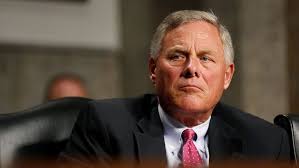
Timing in Politics & Finance: Ask Richard Burr!

Will Richard Burr resign over "stockgate?"


     Timing in politics is very important. Just ask the United States Senators who were privy to early government reports about the coronavirus and possible economic devastation and who sold substantial stock holdings just prior to the big stock market downturn.


Republican Richard Burr is one of those. Senator Burr, who represents North Carolina, has asked for a Senate ethics committee investigation. Many—Democrats and Republicans; Liberals and Conservatives—have called for his resignation which, of course, should also be applied to the members of Congress who did the same as Burr who got out of the stock market when the getting was good.

      I wish I could have, but that’s neither here nor there.

      Maybe anyone elected to any office from council members to mayors to General Assembly members to Governors, Congressmen and Congresswomen, and U.S. Senators, and the President should be required to divest themselves of everything, withdrawing their right to earn income (low taxed capital gains) outside their elected office. (Donald Trump sets such a great example, doesn’t he?)

      That’s not going to happen, but that’s neither here nor there.

      What is here and there is if Senator Burr will resign or even consider it. He says his current term in the Senate will be his last, that he will not seek re-election in 2022. It seems public sentiment is for him to go now, at least that’s what most who are speaking up are saying. Even Thom Tillis, Burr’s North Carolina colleague, questions what Burr did.

        So, if he’s considering resignation, when? Because timing in politics is very important.

      If Burr resigns, North Carolina Governor Roy Cooper gets to appoint someone to the vacancy, but not just anyone. N.C. House bill 659—introduced in 2017, passed June 14, 2018—became a law June 26, 2018, 11 days after Governor Cooper failed to approve or veto the bill which says Cooper will have to choose from three names offered by the Republican Party Executive Committee. Previously, Cooper would have been able to select the Republican of his choosing without suggestions from the GOP committee.

        It gets better.

      Such an appointee, if made more than 60 days prior to the first next election for members of the General Assembly, would only serve through that first next election, Nov. 3, 2020. Therefore on that date there would be an election of a U.S. Senator to serve the final two years of Burr’s term. And, that would probably require primary elections to chose candidates for that ballot. Is there enough time for all of this?

      On the other hand, If Burr resigns effective Sept. 4, within the 60 days law, the Republican appointee would serve through the November election date and the final two years of Burr’s term, getting a head start on being elected again in 2022.

      For the Republican Party, if Burr is considering resigning to rid himself of this “stockgate” and if he wants to protect his party, he’ll wait until early September to vacate his seat. That just might be preferred by Governor Cooper because if Cooper is re-elected this year, he’ll probably run for the Burr seat in 2022, a free election for Cooper, so to speak. If he wins, he goes to Washington. If he loses, he stays for two more years as Governor.

      Yes, timing in in politics is very important.

      Prediction: Burr will not resign, but his situation makes for good political fodder. It’s also disappointing to see an elected official get briefed on the dangers of a danger and, though not necessarily profit from it, be able to cut his losses. 

      I wish I could have.

Thursday, December 5, 2019

What's ahead for N.C. State Wolfpack football? Head Coach Dave Doeren returns for 8th season; Interesting, tough 2020 schedule looms


Wolfpack AD Boo Corrigan
            Is the writing on the wall for Dave Doeren?
            Lest you live in a vacuum, all it takes is a little reading between the lines of a statement from N.C. State’s athletics director Boo Corrigan in which he spouts typical post-season support of his head football coach, who just completed his seventh season (4-8 overall and 1-7 in the Atlantic Coast Conference) with the Wolfpack.
            “The conclusion of a season is a time to reflect, look in the mirror and evaluate the overall direction of the program,” said Corrigan, just seven months on the job in Raleigh, in the December 2 statement. “Dave Doeren is our football coach. He has earned it by winning nine games in back-to-back seasons and I look forward to doing all I can to help. The 2019 season didn’t unfold the way any of us wanted but we will continue to invest in this program, and to provide the resources to help N.C. State football compete at the highest level.”
Wolfpack football coach Dave Doeren
            Part of the “help” required to “compete at the highest level” was a staff change. Instead of breaking Doeren’s contract at a fee of more than $6.6 million and looking for another head coach, defensive coordinator Dave Huxtable was shown the door. He’s owed just $800,000 for the single year remaining on his contract. Firing of an assistant, especially a coordinator, happens often when a head coach is on the hot seat and when coach is told to make staff changes if he wants to stay.
            As far as competing at the highest level, it shouldn’t take much for Doeren to move upward because being at the bottom means upward (or status quo, unfortunately) is the only way to go. After seven seasons in Raleigh, Doeren has a 21-35 ACC record. The 1-7 mark this year and his 0-8 record in 2013 landed the Wolfpack in dead last both seasons in what many football experts say is the weakest from top to bottom of the Power 5 conferences: ACC, Southeastern, Big 10, Big 12, and Pac 12.
            In between the first and last seasons, Doeren coached the Wolfpack to three straight 3-5 conference records and then jumped up to 6-2 and 5-3. Corrigan’s stated reason for retention was about overall wins in seasons 2017 and 2018. Hopefully for Wolfpack fans, improvement will mean winning at least four ACC games sooner than later, though the fan base deserves better.
            The 2020 season doesn’t get any easier for the Wolfpack, even if its personnel is healthy and talented, both of which are to be seen.
            For starters, next fall, it appears N.C State, coming off a dismal 2019 season, will open the on the road in an ACC match-up. If that holds true, and with a home game against Mississippi State set for the next weekend, the Wolfpack will have to get much better faster or there could be a 2019 repeat in 2020.
            More on the schedule a few paragraphs later.
            After the Wolfpack’s 2019 final game last Saturday, a miserable and embarrassing 41-10 loss at home to North Carolina, The News & Observer columnist Luke DeCock, in his post-mortem column, summed up N.C. State’s game performance and future:
There’s none of (UNC’s post-game) optimism at N.C. State, where the Wolfpack dropped its sixth straight to close out a difficult, injury-plagued season at 4-8. Even if fully healthy, it’s hard to see any obvious areas of automatic improvement next season, especially given the quarterback situation, and Dave Doeren already reshuffled his staff after last season, always the hole card of a coach with few other options.
N.C. State has certainly had its moments in this rivalry under Doeren, but with the inroads North Carolina has made on the recruiting trail under (coach Mack) Brown and the Wolfpack in a rebuilding process of indeterminate length, the gap between the programs at the moment appears to be as big as Saturday’s final score.
            If what DeCock writes holds true, that’s not exactly heart-warming for the Wolfpack program, especially for the fans who should and rightfully expect much better from the program and from the coach who will be entering his 8th season. Unfortunately, that seven-year 21-35 record against ACC brethren is a just plain lousy, ninth worst among the 12 head coaches N.C. State has had since 1953 when the ACC was formed.
            So here comes 2020.
Instead of suffering in the heat and humidity of a Labor Day weekend game in Raleigh’s Carter-Finley Stadium, the Wolfpack—according to schedules of the 2020 season found on the website FBschedules.com—could open at Clemson, at Louisville, or at Syracuse on the first weekend in September.
Or, not play that weekend at all and then be without an open date for the next 12 weeks.
N.C. State’s non-conference games are Sept. 12 (Mississippi State, home), Sept. 19 (at Troy), Sept. 26 (Delaware, home), and Nov. 21 (Liberty, home).
Schedules for Clemson, Louisville and Syracuse, along with Georgia Tech, which is not on the Wolfpack’s calendar, do not have games scheduled (according to the FBschedules.com site) for Labor Day weekend. That usually means playing a conference game that weekend, but with five of 14 conference teams not scheduled for Labor Day, and since only four teams could meet that weekend, something will change between now and when the official ACC schedule is published in January, maybe.
            While using spring practice to improve current personnel and using part of pre-season camp to determine the role of incoming freshmen, there will be at least one week of preparation for the opening game, especially important to get off on the right foot in conference play, the season’s first game. One week may not be enough, and with N.C. State’s young team (again next fall, though it shouldn’t be as young as touted in 2019), time is simply not on the Wolfpack’s side.
            After Labor Day is the home game with Mississippi State which was 6-6, 3-5 in the Southeastern Conference in 2019. It’s a Power 5 matchup that’s program-establishing for both teams. The Bulldogs open the season the previous week against New Mexico which was 2-10 in 2019. An easier opener, it seems, than the Wolfpack’s.
            Two of the three remaining non-conference games will not be effortless. The Wolfpack travels to Troy in game three. The Trojans were 5-7 overall and 3-3 in the Sun Belt Conference. In addition to hosting N.C. State, Troy plays at Tennessee in 2020.
            The easiest game for 2020 should be at home against Delaware, another 5-7, 3-5 (Colonial Athletic Association) team. The Liberty game in late November, a week prior to the end of the season, is supposed to be a breather game before playing at North Carolina, if the Wolfpack and Tar Heels keep the Thanksgiving weekend spot on the ACC schedule. The two schools jointly requested that a few years ago, but in nine of 10 seasons of Mack Brown’s first stint at UNC, the Tar Heels and Duke played the last regular season game for each team. Will Brown want to return to that long-time tradition? It’s a good question to ask.
            Liberty, FBS independent, was 7-5 in 2019 with one win against New Mexico and two versus Mexico State, one in Las Cruces and one in Lynchburg. A game late in the season will not be easy for the Wolfpack, especially if there’s a losing streak underway and with that game in Chapel Hill pending.
            Speaking of Duke, the Blue Devils and the Wolfpack renew their rivalry for the first time since 2013, a game Duke won 38-20 in Durham. Duke also won, 49-28, in Carter-Finley Stadium in 2009. In 2008, State won, 27-17, at Wallace Wade “Outdoor” Stadium. N.C. State and Duke did not play 2004-2007, but the Blue Devils and the Wolfpack, about 30 miles apart, had played every season starting with the 1945 game and through 2003.
Overall, Duke leads the series, 41-36-5. This will be just the third game between Duke and State in 17 seasons, and that’s not just a shame; it’s a damn shame. What was once a good rivalry game has turned into just another conference game because of ACC expansion. No matter the date of the game, it will be a tough one for the Wolfpack.
            Duke, a home game for N.C. State, takes the place of Georgia Tech on the Wolfpack’s 2019 schedule. The remaining games are the same as last year with conference home games against Boston College, Florida State, and Wake Forest, and games at Clemson, Louisville, Syracuse, and North Carolina. Of those seven divisional games, maybe a win against Boston College can be penciled in; the other six will be toss-ups at best. State will not be favored.
            With just 13 weeks of regular season games in 2020, it’s likely the Wolfpack’s open date will be either October 17 or 24, the two Saturdays when the North Carolina State Fair is scheduled. The other State Fair date will be used for an away game. So, look for the Wolfpack’s schedule to have two home games in September, three in October and two in November, or something similar.
On the surface, the Wolfpack could and should win at least three non-conference games. If the team wins all four, no matter what happens Labor Day weekend, overall the team is looking at another losing season and a way-down-the-line finish in the ACC.
Hopefully not.
In Doeren’s second season, N.C. State was 7-5 overall regular season record and 3-5 in the ACC. Don’t expect much more than that in 2020, and maybe less.
What is the writing on the wall for Dave Doeren? Yes, Doeren won nine games in his fifth and sixth seasons, and yes, his team made it to five straight bowl games. But in total, the football program has been mediocre at best, especially when looking at the 21-35 ACC record.
So, as far as the writing on the wall is concerned, Wolfpack fans want to know but only Doeren and Corrigan have the answer.